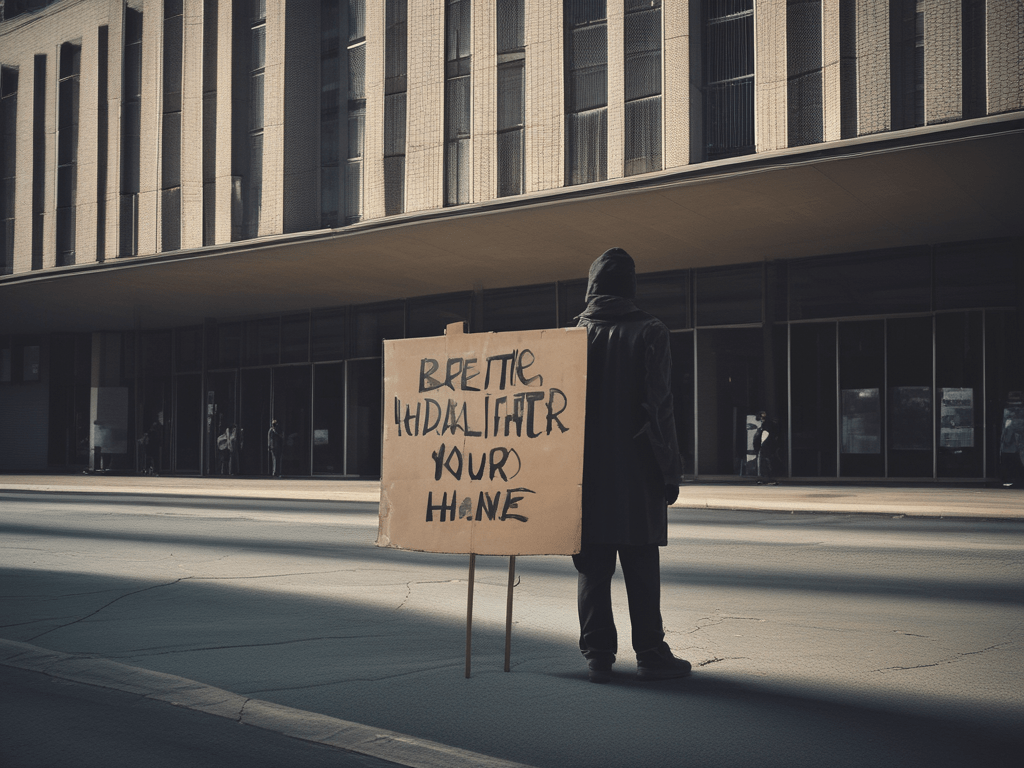
Protest without intent to subvert is political vanity at its finest. In the late 18th and 19th centuries a common form of political subversion was the “Rebellion”. When citizens disapproved of a measure put upon by their governing structures they went to the main office or palace and took someone in power into their grasp and put them under physically compromising circumstances. From the storming of the Bastille in France, The Haitian Revolution, Turner’s Rebellion, The Boston Tea Party to name a few. Some of this even bled into the twentieth century when we look at the Bolshevik Revolution in Russia. In all these instances, people with power shed blood on account of the discontent of the powerless. For better or for worse, this forced change.
My high school and freshman college history courses taught me that people who participated in protest were courageous for going against the times. History textbooks and archives and filled with photos of dirty, bloodied men and women who chose to do the unpopular thing and “fight the power” at the risk of death. Thus, those who lived to tell the tale had the mark of heroism in their favor for tempting fate.
History classes in school tell us the people in the black and white photos changed things. It almost feels as though the academic curricula are the brain children of their activism. However, we do not often get the full story. Or if we do we often prefer to stick to what stories the photos seem to be telling. In American schools protests are encouraged among students for them to “find their voice”. Protest is presented as a form of speech albeit, disagreeable speech.
However, protest if the history courses are telling the truth, is an act of subversion not just speech. So without subversion of the forces that seem to be oppressive, it is just speech and nothing more. In a country where there is free speech, protest cannot be a revolutionary act without being a step in the direction of subversion.
But in a generation where we have not had to fight any great wars of conscience against powers greater or equal, protests have gotten more and more theatrical and activism is endorsed by corporate sponsorship and negotiated by Hollywood talent agents. There have some noteworthy causes demonstrated for at protests, from the George Floyd protests against police brutality and to the protests about the conflict in Gaza. However, the corporate ingenuity of the day has mastered the art of turning all the visibility into an opportunity for endorsement. Thus noble expression without subversive intention turns into a marketing campaign.
Protest has gone from subversion to campaign. In the words of Gil Scott Heron; “The revolution will not be televised”. In his poem, this poet refers to the change that will occur when the cameras are not present. In the same vein, true subversion does not need the attention of the cameras. It is not that it cannot be captured on camera but true subversion will not be on the scheduled programming. And if it is to be truly disruptive, it must involve activity that takes away the effectiveness of the injustice being carried out. Truth be told, the violent approach has been either made illegal or disincentivized but true subversion is disruptive. The Montgomery Bus Boycott was far from violent and actually intentionally passive but it hit the transportation department where hut and it called for a change.
Unfortunately, the idea of protest speech has been so well marketed as subversion to a generation who barely understand where power resides. So at best, their protest enhances their sense of courage, pride and responsibility but keeps them further away in effect from palpable and consequential disruption. This leaves them at the mercy of their own vanity which without cameras cannot secure their commitment and thus their opponents are left in tact.
Written by Julian Michael Yong
 X U L A I M A
Leave a comment